
Exploring the evolution of psychiatry through the integration of digital therapy tools sheds light on innovative methods transforming mental health treatment. This introduction sets the stage for a captivating journey into the realm of modern psychiatric care, highlighting the impact of technology on improving patient outcomes and engagement.
As we delve deeper into the realm of digital therapy tools in psychiatry, we uncover the pivotal role they play in reshaping traditional therapeutic approaches and enhancing the overall quality of mental health care.
Importance of Digital Therapy Tools in Psychiatry
Digital therapy tools play a crucial role in modern psychiatry, revolutionizing the way mental health care is delivered. These innovative tools provide a range of benefits that enhance the quality of psychiatric treatment and make it more accessible to a larger population.
Examples of Popular Digital Therapy Tools
- Headspace: A mindfulness and meditation app that helps individuals manage stress, anxiety, and improve sleep quality.
- Talkspace: An online therapy platform that offers confidential counseling services with licensed therapists via text, video, or voice messaging.
- Moodpath: An app that tracks mood patterns and symptoms of depression, providing feedback and resources for self-management.
Benefits of Incorporating Digital Therapy Tools
- Increased Accessibility: Digital therapy tools break down barriers to mental health care by providing support anytime, anywhere, especially in remote or underserved areas.
- Personalized Treatment: These tools offer tailored interventions based on individual needs, preferences, and progress, enhancing the effectiveness of therapy.
- Enhanced Monitoring: With the ability to track symptoms, mood changes, and progress over time, digital tools enable better monitoring of mental health conditions.
- Cost-Effective Solutions: Utilizing digital therapy tools can be a more affordable option compared to traditional in-person therapy sessions, making mental health care more cost-effective.
Impact of Digital Therapy on Patient Care
Digital therapy tools are revolutionizing the way patients receive mental health treatment by providing convenient and accessible platforms for therapy sessions. These tools offer a range of benefits that enhance patient engagement and improve treatment outcomes.
Improved Accessibility and Convenience
- Digital therapy tools eliminate barriers such as transportation issues and geographic limitations, allowing patients to access therapy from the comfort of their own homes.
- Patients can schedule therapy sessions at times that are convenient for them, making mental health care more accessible and flexible.
- Teletherapy options provide a convenient alternative for individuals with physical disabilities or those living in remote areas with limited access to traditional therapy services.
Enhanced Patient Engagement
- Interactive features of digital therapy tools, such as mood tracking, journaling, and progress monitoring, promote active participation in the therapeutic process.
- Personalized treatment plans and self-help resources tailored to individual needs encourage patients to take an active role in their mental health.
- Regular communication with therapists through secure messaging or video calls fosters a sense of connection and support, leading to increased engagement and motivation.
Effectiveness of Digital Therapy Tools
- Studies have shown that digital therapy tools can be as effective as traditional face-to-face therapy in treating a variety of mental health conditions, including anxiety, depression, and PTSD.
- Some patients may feel more comfortable opening up about their thoughts and feelings in an online setting, leading to greater disclosure and progress in therapy.
- Digital therapy tools often incorporate evidence-based practices and therapeutic techniques, ensuring high-quality care and positive treatment outcomes.
Advancements in Digital Psychiatry
Digital psychiatry has seen significant advancements in recent years, leveraging cutting-edge technologies to enhance patient care and treatment outcomes.
Integration of Artificial Intelligence
Artificial intelligence (AI) is revolutionizing digital therapy tools by offering personalized treatment options based on individual patient data. AI algorithms can analyze vast amounts of information and provide tailored interventions, leading to more effective and customized care plans.
Virtual Reality and Augmented Reality
Virtual reality (VR) and augmented reality (AR) are reshaping the landscape of psychiatric care by creating immersive and interactive therapy experiences. These technologies allow patients to engage in simulated environments, helping them confront and manage their fears and anxieties in a controlled setting.
VR and AR applications also enable therapists to deliver exposure therapy and cognitive-behavioral interventions in innovative ways, enhancing the overall treatment process.
Ethical Considerations in Digital Psychiatry
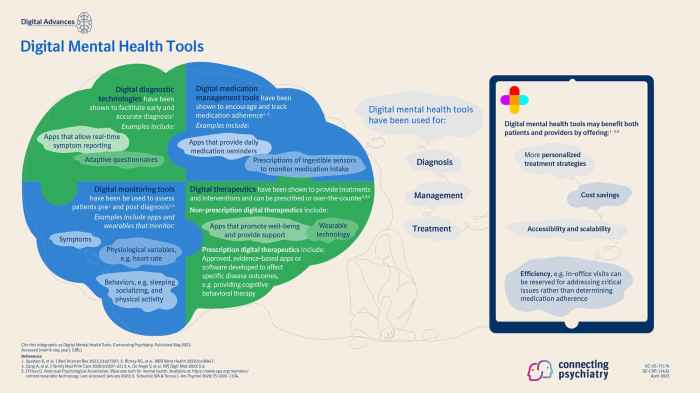
Digital therapy tools in psychiatry bring about several ethical considerations that need to be carefully addressed to ensure the well-being of patients and the integrity of the treatment process.
Patient Privacy and Data Security
Patient privacy and data security are paramount when it comes to using digital therapy platforms in psychiatry. With the collection of sensitive information and personal data, there is a risk of breaches and unauthorized access. It is crucial for healthcare providers to implement robust security measures, encryption protocols, and strict access controls to protect patient information from potential threats and maintain confidentiality.
Balancing Technology-Driven Care and Traditional Therapeutic Approaches
Maintaining a balance between technology-driven care and traditional therapeutic approaches is essential in digital psychiatry. While digital therapy tools offer convenience, accessibility, and scalability, it is important not to overlook the human touch and empathetic connection that traditional therapy provides.
Healthcare professionals must ensure that technology complements rather than replaces traditional therapeutic practices to deliver holistic and effective care to patients. Finding the right balance is key to maximizing the benefits of both approaches while upholding ethical standards in psychiatric treatment.
Final Review
In conclusion, the integration of digital therapy tools in psychiatry represents a significant shift towards personalized and efficient mental health care. As technology continues to advance, the landscape of psychiatric treatment evolves, offering new possibilities for patients and practitioners alike.
Popular Questions
How are digital therapy tools revolutionizing psychiatric treatment?
Digital therapy tools are revolutionizing psychiatric treatment by providing personalized and accessible care options, improving patient engagement and outcomes.
What are some popular examples of digital therapy tools used in psychiatric care?
Popular examples include Talkspace, BetterHelp, and Woebot, which offer a range of therapeutic interventions through digital platforms.
What ethical considerations should be taken into account when using digital therapy tools in psychiatry?
Ethical considerations include patient privacy, data security, and maintaining a balance between technology-driven care and traditional therapeutic approaches.
How do advancements in artificial intelligence impact the field of digital psychiatry?
Advancements in artificial intelligence enable personalized treatment plans and interventions, enhancing the efficacy of digital therapy tools in psychiatric care.
What role do virtual reality and augmented reality play in transforming psychiatric care?
Virtual reality and augmented reality technologies are transforming psychiatric care by providing immersive therapeutic experiences and innovative treatment modalities.