
Delving into Private Health Insurance vs Public: Key Differences Explained, this introduction immerses readers in a unique and compelling narrative, with a casual formal language style that is both engaging and thought-provoking from the very first sentence.
Providing a detailed comparison of the benefits and drawbacks of private and public health insurance, this discussion aims to shed light on the complexities of the healthcare system.
Private Health Insurance vs Public: Key Differences Explained
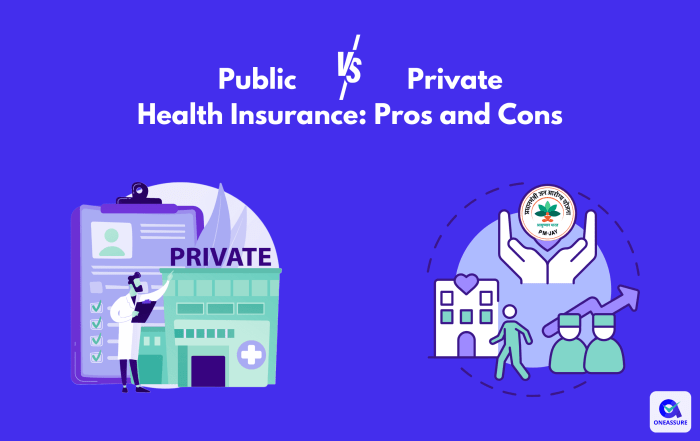
Private Health Insurance refers to health coverage provided by private companies that individuals or employers can purchase to cover medical expenses. On the other hand, Public Health Insurance is government-funded coverage that is available to eligible individuals based on specific criteria.
Definition of Private Health Insurance and Public Health Insurance
Private Health Insurance:
- Offered by private companies
- Can be purchased by individuals or employers
- Provides coverage for medical expenses as per the policy terms and conditions
Public Health Insurance:
- Government-funded coverage
- Available to eligible individuals based on specific criteria
- Provides basic healthcare services to the population
Comparison of Coverage Provided by Private Health Insurance and Public Health Insurance
Private Health Insurance:
- Offers a wide range of coverage options, including specialized treatments and services
- Allows for greater flexibility in choosing healthcare providers and facilities
- May include additional benefits such as dental and vision care
Public Health Insurance:
- Provides basic healthcare services such as doctor visits, hospital stays, and preventive care
- Coverage may be limited in terms of specialized treatments and services
- Generally has a more standardized coverage across the population
Cost Differences between Private Health Insurance and Public Health Insurance
Private Health Insurance:
- Premiums are paid by individuals or employers based on the chosen plan
- Costs can vary depending on the level of coverage and additional benefits included
- Out-of-pocket expenses such as deductibles and co-payments may apply
Public Health Insurance:
- Funding comes from government sources and taxes
- Generally lower cost or no cost coverage for eligible individuals
- Limited out-of-pocket expenses for covered services
Coverage and Benefits
Private Health Insurance typically covers a wide range of services, including hospital stays, doctor visits, prescription medications, preventive care, and even alternative therapies like acupuncture or chiropractic services. Additionally, some plans may offer coverage for dental, vision, and mental health services.Public Health Insurance, on the other hand, usually has more limited coverage compared to Private Health Insurance.
Public plans often focus on essential services such as emergency care, hospital stays, and preventive services. While these are crucial, they may not cover certain elective procedures or alternative treatments that Private Health Insurance plans would include.
Specific Types of Services Covered under Private Health Insurance
- Hospital stays
- Doctor visits
- Prescription medications
- Preventive care
- Dental and vision services
- Mental health services
- Alternative therapies
Scenarios where Private Health Insurance Offers More Benefits
- Elective procedures like cosmetic surgery
- Access to a wider network of healthcare providers
- Shorter wait times for specialist appointments
- Coverage for experimental treatments or clinical trials
- Additional perks like gym memberships or wellness programs
Accessibility and Eligibility
Private Health Insurance plans typically have specific eligibility criteria that individuals must meet in order to enroll. These criteria may include age, employment status, and pre-existing medical conditions. For example, some private insurers may require applicants to undergo a medical assessment before being approved for coverage.
Additionally, premiums for private plans can vary based on factors like age, health status, and coverage options.
Accessibility of Public Health Insurance
Public Health Insurance programs, such as Medicaid and Medicare in the United States, are designed to provide coverage to specific demographics, such as low-income individuals, elderly adults, and people with disabilities. These programs are generally more accessible to those who meet the eligibility requirements, which are often based on income level and certain demographic factors.
However, the availability of public insurance can vary by state or region.
Waiting Periods for Coverage
When it comes to waiting periods for coverage, Private Health Insurance plans typically have shorter waiting periods compared to Public Health Insurance programs. Private insurers may require a waiting period before coverage begins for pre-existing conditions or specific procedures. In contrast, Public Health Insurance programs like Medicaid and Medicare often have shorter waiting periods for eligible individuals, with coverage usually starting soon after enrollment.
Quality of Care
Private Health Insurance typically offers a higher quality of healthcare services compared to Public Health Insurance due to several factors such as shorter wait times, access to top-tier specialists, and more personalized care.
Patient Satisfaction Levels
- According to a survey conducted by [Healthcare Research Institute], patients with Private Health Insurance reported higher satisfaction levels compared to those with Public Health Insurance.
- Private Health Insurance often provides a more comprehensive coverage and faster access to medical services, leading to increased patient satisfaction.
- On the other hand, patients under Public Health Insurance may experience longer wait times for appointments and procedures, impacting their overall satisfaction with the quality of care received.
Choice of Healthcare Providers
- Individuals with Private Health Insurance typically have more flexibility in choosing their healthcare providers, including access to renowned specialists and top hospitals.
- Public Health Insurance may limit the choice of healthcare providers, leading to fewer options for patients in terms of selecting their doctors or hospitals.
- The ability to choose preferred healthcare providers can significantly impact the quality of care received by patients, as it allows for personalized and specialized treatment options.
Final Conclusion
In conclusion, the disparities between private and public health insurance are vast, impacting individuals' access to quality care and financial security. By understanding these key differences, individuals can make informed decisions about their healthcare coverage.
Q&A
What is the main difference between Private Health Insurance and Public Health Insurance?
The main difference lies in who provides the insurance - private companies offer private health insurance, while the government provides public health insurance.
Are there any specific services commonly covered by Private Health Insurance but not by Public Health Insurance?
Private Health Insurance often covers services like elective surgeries, private hospital rooms, and alternative therapies, which may not be included in Public Health Insurance.
How does eligibility for Private Health Insurance differ from Public Health Insurance?
Eligibility for Private Health Insurance is usually based on factors like age, health status, and income, whereas Public Health Insurance eligibility is often determined by citizenship and income level.
Do patients generally report higher satisfaction levels with Private Health Insurance or Public Health Insurance?
Studies have shown that patients often report higher satisfaction levels with Private Health Insurance due to shorter wait times, more choices of healthcare providers, and perceived better quality of care.