
Exploring the realm of psychiatric medications in 2025 unveils a landscape where safety and effectiveness intertwine to shape mental health treatment. Dive into this informative piece that delves into the evolution of psychiatric medications and their pivotal role in managing mental health disorders.
Learn about the factors that drive the efficacy and safety of these medications, painting a comprehensive picture of the advancements in the field.
Overview of Top Psychiatric Medications in 2025
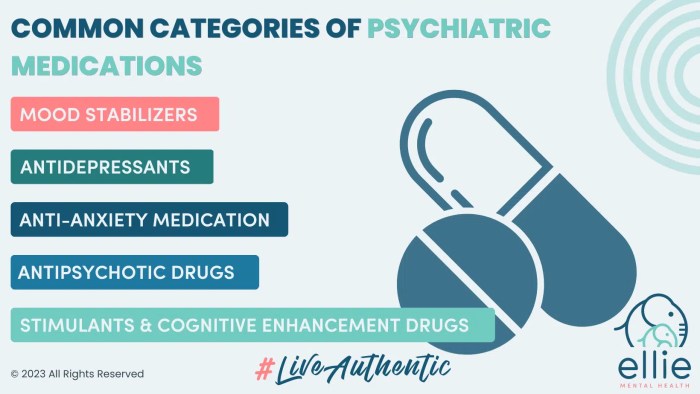
Psychiatric medications play a crucial role in the treatment of various mental health disorders, helping individuals manage symptoms and improve their quality of life. These medications are prescribed by healthcare professionals to address conditions such as depression, anxiety, bipolar disorder, schizophrenia, and more.Advancements in psychiatric medications have significantly evolved over the years, with researchers continuously working to develop new and improved treatment options.
The introduction of selective serotonin reuptake inhibitors (SSRIs), serotonin-norepinephrine reuptake inhibitors (SNRIs), atypical antipsychotics, and mood stabilizers has revolutionized the field of psychiatry. These medications target specific neurotransmitters in the brain to regulate mood, emotions, and behavior.Key factors influencing the effectiveness and safety of psychiatric medications include proper diagnosis, individualized treatment plans, dosage adjustments, monitoring for side effects, and adherence to medication regimens.
Factors such as genetics, age, gender, lifestyle, and coexisting medical conditions can also impact how a person responds to psychiatric medications. It is essential for healthcare providers to consider these factors when prescribing and managing psychiatric medications to ensure optimal outcomes for patients.
Safety Profiles of Leading Psychiatric Medications
When it comes to psychiatric medications, safety is a crucial aspect that healthcare providers and patients need to consider. Understanding the safety profiles of the top psychiatric medications in 2025 is essential for making informed treatment decisions.
Antidepressants
- Antidepressants are commonly prescribed for conditions like depression and anxiety disorders.
- Common side effects may include nausea, weight gain, sexual dysfunction, and insomnia.
- Serotonin syndrome is a rare but serious potential risk associated with some antidepressants, especially when combined with other medications.
Antipsychotics
- Antipsychotic medications are used to treat conditions like schizophrenia and bipolar disorder.
- Potential side effects include weight gain, metabolic issues, movement disorders, and increased risk of diabetes.
- Some antipsychotics have a black box warning for an increased risk of mortality in elderly patients with dementia-related psychosis.
Mood Stabilizers
- Mood stabilizers are often prescribed for bipolar disorder to help manage mood swings.
- Common side effects may include tremors, weight gain, and gastrointestinal disturbances.
- Regular monitoring of blood levels is necessary for some mood stabilizers to prevent toxicity.
Effectiveness of Top Psychiatric Medications
When it comes to psychiatric medications, effectiveness is a crucial factor in managing mental health conditions. These medications play a vital role in improving symptoms and enhancing the overall well-being of individuals dealing with various mental health disorders.
Antidepressants
Antidepressants are commonly prescribed to treat depression, anxiety disorders, and other mood disorders. They work by balancing neurotransmitters in the brain, such as serotonin and norepinephrine, which can help alleviate symptoms of depression and anxiety.
- Selective serotonin reuptake inhibitors (SSRIs), such as Prozac and Zoloft, are often the first-line treatment for depression due to their effectiveness in managing symptoms.
- Tricyclic antidepressants, like Elavil and Tofranil, are also effective but may have more side effects compared to SSRIs.
- Monoamine oxidase inhibitors (MAOIs) are another class of antidepressants reserved for cases where other medications have not been effective.
Antipsychotics
Antipsychotics are primarily used to treat psychotic disorders like schizophrenia and bipolar disorder. They work by blocking dopamine receptors in the brain, helping to reduce symptoms of psychosis, such as hallucinations and delusions.
- Atypical antipsychotics, such as Abilify and Risperdal, are commonly prescribed due to their effectiveness in managing symptoms with fewer side effects compared to older antipsychotics.
- Typical antipsychotics, like Haldol and Thorazine, are still used in some cases but may have more side effects than atypical antipsychotics.
Anti-Anxiety Medications
Anti-anxiety medications, also known as anxiolytics, are used to manage symptoms of anxiety disorders and panic attacks. These medications work by enhancing the effects of neurotransmitters like gamma-aminobutyric acid (GABA) to promote relaxation and reduce anxiety.
- Benzodiazepines, such as Xanax and Ativan, are fast-acting medications that can provide immediate relief from acute anxiety symptoms.
- Buspirone is a non-benzodiazepine anti-anxiety medication that may be prescribed for long-term management of anxiety disorders.
Emerging Trends in Psychiatric Medications
In 2025, the field of psychiatric medications is witnessing the emergence of new treatments that are gaining popularity due to their innovative approaches and promising results. Researchers are continuously exploring novel compounds and therapies to address mental health conditions more effectively.
Novel Psychiatric Medications
- One of the new psychiatric medications gaining attention is a promising antidepressant that targets specific neurotransmitters in the brain, showing faster onset of action and fewer side effects compared to traditional SSRIs.
- Researchers are also investigating psychedelic compounds for their potential in treating conditions such as PTSD and treatment-resistant depression, with early studies showing promising results in improving symptoms.
Innovative Research in Psychiatric Medications
- New studies are focusing on personalized medicine approaches in psychiatry, utilizing genetic testing to determine the most effective medication for individual patients based on their genetic makeup and metabolic profiles.
- Researchers are also exploring the use of digital therapeutics and virtual reality interventions as adjuncts to traditional psychiatric medications, aiming to enhance treatment outcomes and patient engagement.
Future Developments in Psychiatric Medication
- Advancements in neuroimaging technologies are paving the way for the development of medications that target specific brain regions implicated in various mental health disorders, offering more precise and targeted treatment options.
- The integration of machine learning and artificial intelligence in psychiatric medication research holds the potential to identify novel drug targets and optimize treatment regimens based on individual responses and symptom profiles.
Summary
As we wrap up this discussion on Top Psychiatric Medications in 2025: Safety and Effectiveness, we reflect on the strides made in psychiatric treatment. From safety profiles to emerging trends, this overview provides a glimpse into the future of mental health care.
FAQ Insights
How do advancements in psychiatric medications impact mental health treatment?
Advancements in psychiatric medications lead to more targeted therapies, improving treatment outcomes for individuals with mental health disorders.
What are some potential side effects of top psychiatric medications in 2025?
Common side effects may include nausea, dizziness, and weight changes, but these can vary depending on the specific medication.
Are there new psychiatric medications gaining popularity in 2025?
Yes, there are emerging medications with innovative mechanisms of action that are becoming more widely used in psychiatric treatment.